Saturday, November 7, 2009

The Fate of the Cross


Sitting in an airport recently for several hours - a perfectly smart, pleasant, efficient airport - I had occasion to look around and realise something. Not only could I have been in almost any country of the world, and therefore I was in some sense "nowhere", but I was in a space where signs predominated over symbols. Everywhere I looked there were signs: pictures, advertisements, instructions, those little "icons" that tell you where the toilets are, or ground transportation. But the whole place had been constructed with absolutely no sensitivity to the natural symbolism of shape and number and light. Of course, that didn't mean that symbolism had been eliminated, just that it was inadvertent. The modern world tends to eliminate symbolism, because symbols, unlike signs, point us to something outside this world, something deeper and more real than toilets, or things to buy.

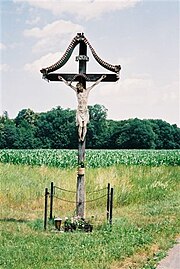
The final elimination of symbols that speak of the transcendent has not yet taken place, but the recent judgement of the Court of Human Rights that Italian schools must remove crucifixes from their walls shows that the struggle is intensifying. A crucifix may be treated as a sign, in which case it points to the social phenomenon of Christianity, much as a Union Jack represents the United Kingdom. This is how it is being treated by the Court - as the flag of Christianity. But the crucifix is also a concatenation of symbols, a symbol par excellence, the symbol of symbols. In a way, the attack on the crucifix is itself symbolic - of an attack on symbols in our culture.

It is more important than ever that our education should give special attention to cultivating the symbolic imagination. James Taylor's Poetic Knowledge is a helpful resource. What he calls "poetic knowledge" is the intuitive, tacit, connatural way of knowing that tends to be neglected in the pursuit of mere information. Catechesis, too, needs to take more account of the symbolic dimension of scripture and the sacraments. More on that another time.

Thursday, November 5, 2009

The Source of Ugliness


There is a noticeable ugliness in much 20th-century architecture, design, and town planning that expresses a deeply rooted problem in the way we have learned to think. The problem, as I try to show in my book, can be traced back to Descartes (or even further to William of Ockham). If I may caricature somewhat, Descartes lay the foundations of modern instrumental reason by reducing everything to positions on a conceptual grid. Very efficient, very helpful - like putting the world on a slab in order to conduct a post-mortem (or vivesection). The industrial method is similar - for the sake of mass production and division of labour (sometimes called Taylorism). This is what Christopher Alexander says about it: "Mass production, high industry, and lower craft techniques advocated in the 20th century, as a result of Taylorism, led to a world where it was thought efficient or good to make things out of massive ultra-simple elements like huge prefabricated concrete panels, which would then be joined in the simplest ways, and without significant differentiation at the joints..." Everything has to fit into "brutalized rectangles". On his website and in his books, such as Pattern Language and The Nature of Order, listed in the Links section, you will find Alexander's detailed analysis of this phenomenon and his solution to it.

The contrast between buildings produced from the Cartesian analytic mentality and, for example, the medieval Gothic cathedrals or the works of Antoni Gaudi in the 20th century could not be more extreme. The latter are participatory and organic in conception and execution, as is nearly all traditional architecture the world over. There are lessons here not only for architects and designers of sacred spaces, but for those who design buildings for secular use, and even for managers of organizations and communities. Please note that I am not saying that all modern architecture is ugly, or that Gothic is best, but that by comparing the worst of the modern with the best of the ancient and medieval, we can learn something true and useful.